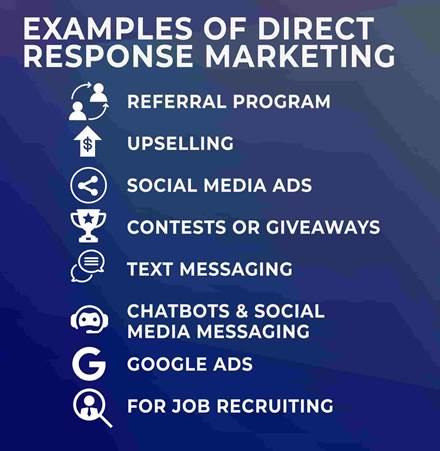
Direct response marketing is a strategy used by businesses to prompt an immediate response from potential customers. Unlike traditional marketing methods that focus on building brand awareness over time, direct response marketing aims to generate instant results by encouraging consumers to take a specific action, such as making a purchase, signing up for a newsletter, or requesting more information.
One of the key advantages of direct response marketing is its measurability. By tracking responses to specific campaigns or advertisements, businesses can quickly determine the effectiveness of their messaging and make data-driven decisions to optimize their marketing efforts. This real-time feedback allows companies to adjust their strategies on the fly, maximizing their return on investment.
Direct response marketing often utilizes compelling calls-to-action that create a sense of urgency or offer a valuable incentive to encourage immediate action. These calls-to-action can be delivered through various channels, including email, social media, direct mail, and online advertisements. By targeting specific audience segments with personalized messaging, businesses can increase the likelihood of conversion and drive revenue growth.
In addition to driving sales and leads, direct response marketing also fosters engagement and interaction with customers. By establishing direct lines of communication with consumers, businesses can build relationships based on trust and loyalty. This two-way dialogue allows companies to gather feedback, address customer concerns, and tailor future marketing efforts to better meet the needs of their target audience.
Overall, direct response marketing offers a proactive approach to engaging consumers and driving business results. By leveraging targeted messaging, compelling calls-to-action, and real-time analytics, businesses can create impactful campaigns that deliver tangible outcomes and drive long-term success.
7 Essential Tips for Effective Direct Response Marketing
- Clearly define your target audience to tailor your message effectively.
- Create a compelling offer that encourages immediate action from the audience.
- Use attention-grabbing headlines and visuals to capture interest quickly.
- Include a strong call-to-action that guides the audience on what to do next.
- Provide easy ways for customers to respond, such as through a website or phone number.
- Track and analyze response rates to measure the effectiveness of your campaigns.
- Continuously test and optimize your direct response marketing strategies for better results.
Clearly define your target audience to tailor your message effectively.
To maximize the effectiveness of your direct response marketing efforts, it is crucial to clearly define your target audience. By understanding the demographics, preferences, and behaviors of your ideal customers, you can tailor your message in a way that resonates with them on a personal level. This targeted approach allows you to speak directly to the needs and interests of your audience, increasing the likelihood of generating a positive response and driving conversions. By crafting messages that are relevant and compelling to your target market, you can create more meaningful connections and ultimately achieve greater success with your marketing campaigns.
Create a compelling offer that encourages immediate action from the audience.
To maximize the effectiveness of direct response marketing, it is crucial to create a compelling offer that motivates the audience to take immediate action. By presenting a valuable incentive or solution that addresses the needs or desires of the target market, businesses can capture the attention of potential customers and prompt them to engage with the brand. Whether it’s a limited-time discount, a free trial, or an exclusive bonus, a compelling offer can drive conversions and generate measurable results, ultimately leading to increased sales and customer acquisition.
Use attention-grabbing headlines and visuals to capture interest quickly.
When implementing direct response marketing strategies, it is crucial to use attention-grabbing headlines and visuals to capture interest quickly. In a fast-paced digital world where consumers are constantly bombarded with information, a compelling headline and eye-catching visuals can make all the difference in grabbing their attention and prompting them to take action. By creating visually appealing content that stands out and crafting headlines that pique curiosity or offer a solution to a problem, businesses can increase the likelihood of engaging their target audience and driving conversions.
Include a strong call-to-action that guides the audience on what to do next.
A crucial aspect of effective direct response marketing is the inclusion of a strong call-to-action that guides the audience on what to do next. By clearly outlining the desired action, such as “Shop Now,” “Sign Up Today,” or “Learn More,” businesses can prompt immediate engagement and drive conversions. A compelling call-to-action not only motivates the audience to take the desired step but also creates a sense of urgency or excitement that encourages swift response. When crafting a call-to-action, it is essential to be concise, specific, and persuasive to maximize its impact and compel the audience to act decisively.
Provide easy ways for customers to respond, such as through a website or phone number.
To maximize the effectiveness of direct response marketing, it is crucial to provide customers with convenient and accessible ways to respond to your call-to-action. By offering easy response options, such as directing customers to a user-friendly website or providing a dedicated phone number for inquiries or orders, businesses can streamline the customer journey and increase conversion rates. Simplifying the response process not only encourages immediate action but also enhances the overall customer experience, ultimately leading to higher engagement and improved results in your marketing campaigns.
Track and analyze response rates to measure the effectiveness of your campaigns.
To maximize the impact of your direct response marketing campaigns, it is crucial to track and analyze response rates. By monitoring how consumers engage with your messaging and calls-to-action, you can gain valuable insights into the effectiveness of your campaigns and make informed decisions to optimize future strategies. Tracking response rates allows you to identify which tactics are resonating with your audience and which may need adjustment, ultimately helping you refine your approach to drive better results and achieve your marketing goals.
Continuously test and optimize your direct response marketing strategies for better results.
To maximize the effectiveness of your direct response marketing efforts, it is crucial to continuously test and optimize your strategies. By conducting A/B testing, analyzing data, and making informed adjustments based on performance metrics, you can refine your campaigns to achieve better results over time. This iterative process allows you to identify what resonates most with your target audience, improve conversion rates, and ultimately enhance the overall success of your direct response marketing initiatives.